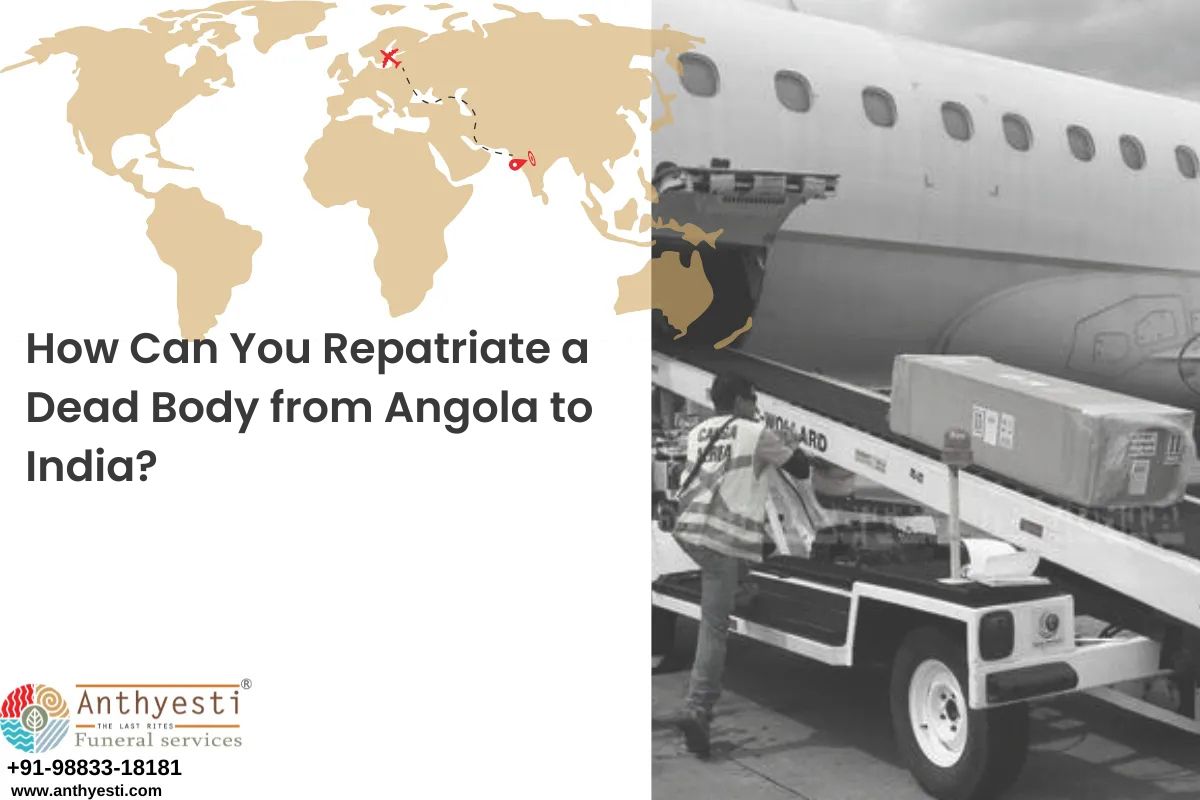
Losing a family member or a loved one in a foreign country is a deeply distressing experience. When this tragedy occurs in Angola, the bureaucratic hurdles surrounding the repatriation of mortal remains can feel insurmountable. Transporting a deceased individual across international borders requires meticulous coordination between Angolan civil authorities, medical institutions, the Embassy of India in Luanda, and international aviation bodies.
The process of international dead body transport involves rigorous adherence to World Health Organization (WHO) guidelines, highly specific diplomatic clearances, and linguistic considerations due to Angola’s Portuguese administrative system. This authoritative guide details the end-to-end procedure, ensuring families are well-equipped to navigate the repatriation from Angola to India.
Key Overview: Angola to India Repatriation
- Indian Embassy Clearance: A No-Objection Certificate (NOC) from the Indian Embassy in Talatona, Luanda, is strictly mandatory.
- Translation Requirements: Angola operates in Portuguese. All official documents (Death Certificate, Police Report) must be translated into English by a certified translator.
- Medical Standards: WHO-compliant embalming and a Non-Communicable Disease (NCD) Certificate are required by all airlines.
- Aviation Compliance: The deceased must be transported in a hermetically sealed, zinc-lined coffin enclosed in a wooden freight crate.
- Expected Timeline: Processing administrative and medical clearances typically takes 5 to 10 working days, barring police investigations.
The Crucial Role of the Indian Embassy in Luanda
The foremost authority for facilitating the return of an Indian national’s remains from Angola is the Embassy of India. It is highly recommended to notify the consular section immediately upon the demise of the individual. The Embassy validates the documentation and issues the decisive No-Objection Certificate (NOC), without which no airline will accept the cargo, and Indian Customs will deny entry.
Embassy of India, Luanda Details:
Address: Four Villas Condominio, Villa No. 4, Av. Principal de Talatona (Avenida Samora Machel), Talatona, Luanda, Angola.
Consular Hours: Monday to Friday, 09:00 to 12:00.
Note: The Embassy must also formally cancel the deceased’s original Indian passport before the body can leave the country. The cancelled passport will be returned to the family alongside the NOC.
Medical & Embalming Requirements (WHO Standards)
International aviation law strictly prohibits the transportation of human remains without proper preservation. In Angola, the body must be transferred to a recognized hospital mortuary where certified professionals perform the embalming process.
Embalming involves treating the body with specialized chemical preservatives to halt decomposition and eliminate any biological hazard during transit. The mortuary must issue an Embalming Certificate affirming compliance with World Health Organization (WHO) hygiene standards.
Furthermore, a Non-Communicable Disease (NCD) Certificate is mandatory. This document certifies that the individual did not pass away from a highly infectious pathogen, assuring airline staff and border health officials that the cargo poses no public health risk.
Navigating the Language Barrier & Apostille Process
One of the most complex aspects of repatriation from Angola is the language barrier. Official documents issued by local Angolan hospitals or police departments are entirely in Portuguese.
To be accepted by the Indian Embassy, Indian airport authorities, and international airlines, all documents must be translated into English by a legally sworn translator. Additionally, documents such as the Death Certificate often require an apostille or formal attestation from the Angolan Ministry of External Relations (MIREX) to establish their international legal validity.
Mandatory Checklist of Documents
Gathering the correct paperwork is the most time-consuming phase. Ensure you have the original and multiple translated copies of the following:
- Local Death Certificate: Issued by the Angolan civil registry or hospital (with certified English translation).
- Medical / Cause of Death Certificate: Detailing the exact medical reason for passing.
- Police Clearance Report: Strictly required if the death was unnatural, accidental, or under investigation (translated to English).
- Embalming Certificate: Confirming WHO-standard chemical preservation.
- Non-Communicable Disease (NCD) Certificate: Proving the absence of infectious hazards.
- Coffin Packing Certificate: Issued by the undertaker, confirming the use of a hermetically sealed, zinc-lined coffin.
- NOC from the Indian Embassy: The final diplomatic clearance issued in Luanda.
- Cancelled Indian Passport: The deceased’s original passport, officially voided by the Embassy.
- Consent Letter from Next of Kin: A notarized authorization letter permitting a specified individual or funeral agency to transport the body.
Air Cargo Airlines Flying from Luanda to India
Human remains are classified strictly as registered air cargo and cannot be flown as standard baggage. Repatriation flights primarily depart from Quatro de Fevereiro International Airport (LAD) in Luanda, destined for major Indian hubs like Delhi (DEL), Mumbai (BOM), or Chennai (MAA).
Ethiopian Airlines Cargo
A highly reliable carrier connecting Luanda to major Indian cities via their hub in Addis Ababa (ADD). They possess extensive experience in handling human remains across the African continent.
Emirates SkyCargo
Operating via Dubai (DXB), Emirates offers premium cargo handling with specialized temperature-controlled facilities, ensuring the dignity and preservation of the remains throughout transit.
Qatar Airways Cargo
Another excellent option routing through Doha (DOH). Qatar Airways adheres strictly to IATA regulations and requires seamless AWB (Air Waybill) generation and early cargo terminal drop-offs.
Frequently Asked Questions (FAQ)
How to repatriate a dead body from Angola to India?
Repatriating a body from Angola involves obtaining a local Death Certificate, translating it from Portuguese to English, securing WHO-standard embalming, getting a No-Objection Certificate (NOC) from the Indian Embassy in Luanda, and booking specialized air cargo.
Where is the Indian Embassy in Angola located?
The Embassy of India in Angola is located at Four Villas Condominio, Villa No. 4, Av. Principal de Talatona (Avenida Samora Machel), Talatona, Luanda. They issue the mandatory NOC and cancel the deceased’s passport.
Do Angolan documents need to be translated to English?
Yes. Because Angola’s official language is Portuguese, all local documents, including the death certificate and police reports, must be translated into English by a certified translator before submission to the Indian Embassy and airlines.
Is embalming mandatory for international flights from Angola?
Absolutely. Embalming according to World Health Organization (WHO) standards is strictly mandatory. You must obtain an Embalming Certificate from a recognized hospital or mortuary in Luanda.
What type of coffin is required for the flight to India?
International aviation laws (IATA) require the body to be placed in a zinc-lined, hermetically sealed, airtight coffin, which is then secured inside a sturdy wooden crate for cargo transport to prevent any leakage or contamination.
Which cargo airlines fly human remains from Luanda to India?
Major carriers operating out of Quatro de Fevereiro International Airport (LAD) that transport human remains to India include Ethiopian Airlines Cargo, Emirates SkyCargo, and Qatar Airways Cargo.
What happens to the passport of the deceased?
The original Indian passport of the deceased must be submitted to the Embassy of India in Luanda. The Embassy will officially cancel it, stamp it, and return it alongside the NOC for Indian customs clearance.
What is a Non-Communicable Disease (NCD) Certificate?
An NCD certificate is issued by a local medical authority confirming that the deceased did not die from a highly contagious or infectious disease, ensuring it is safe for international border transit.
How long does the entire repatriation process take from Angola?
The process generally takes between 5 to 10 working days. Unnatural deaths involving police investigations or delays in attesting documents at the Ministry of Foreign Affairs (MIREX) may extend this timeline.
Do I need an apostille for the Angolan death certificate?
Yes, local official documents often require attestation or apostille by the Angolan Ministry of External Relations (MIREX) to be considered legally valid internationally before the Indian Embassy issues clearance.
Professional International Repatriation Services
Managing the bureaucratic and logistical complexities of repatriating a loved one from Angola can be incredibly stressful. Anthyesti Funeral Services specializes in seamless, end-to-end international dead body transport.
From document translation and embassy coordination in Luanda to customs clearance in India, we ensure your loved one returns home with dignity and without delay.