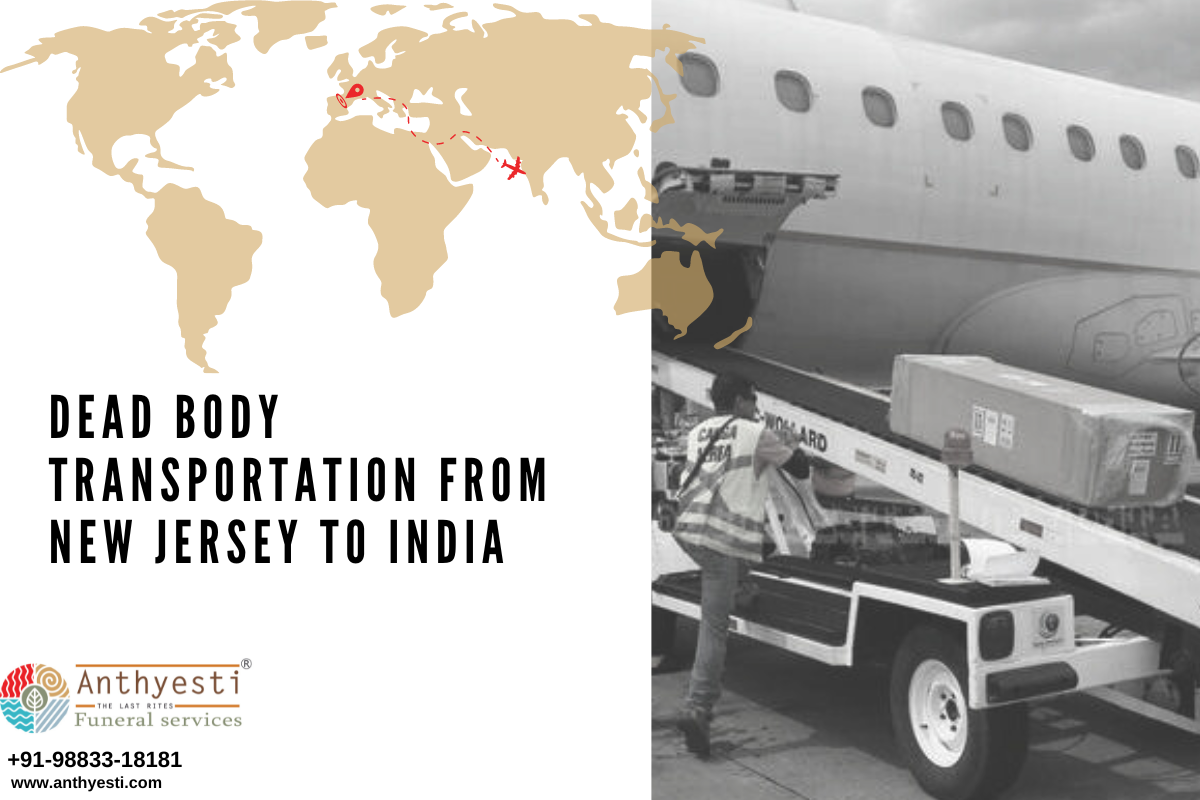
Losing a loved one overseas is an overwhelmingly emotional experience. Transporting a deceased individual from New Jersey (NJ) to India involves navigating complex consulate regulations, stringent WHO embalming standards, and specific international air cargo protocols. This comprehensive guide outlines the exact legal, medical, and logistical requirements to ensure a dignified and compliant repatriation.
Key Overview
Essential Steps for New Jersey Repatriation
The process of repatriating mortal remains from New Jersey to India is highly regulated by both US local health authorities and the Indian Government. Due to international aviation security, families cannot independently book human remains as cargo; it is mandatory to engage a licensed funeral director who is certified as a TSA-Known Shipper.
The entire process typically takes between 4 to 7 business days, depending on the speed of local documentation, autopsy requirements (if the death was sudden or accidental), and airline cargo availability at major hubs like Newark Liberty International Airport (EWR) or John F. Kennedy International Airport (JFK).
Immediate Action: If the death occurred at home, immediately contact 911 or the local police, who will notify the County Medical Examiner. If the death occurred in a hospital, inform the hospital mortuary that you intend to repatriate the body to India, so they can coordinate with your chosen international funeral director.
Consular Jurisdiction
Consulate General of India, New York Jurisdiction
The United States is divided into different consular jurisdictions by the Indian Embassy. For residents of New Jersey, all consular formalities—most importantly, the issuance of the No Objection Certificate (NOC)—must be processed through the Consulate General of India in New York, located at 3 East 64th Street, New York, NY 10065.
The NOC is the most critical document; without it, Indian Customs will not allow the coffin to enter the country. To obtain the NOC from CGI New York, the funeral director or family must submit a specific set of legalized documents.
- Original Death Certificate: Issued by the State of New Jersey Registrar of Vital Statistics.
- Embalming Certificate: Signed by a licensed mortician.
- Non-Communicable Disease (NCD) Certificate: Proving the deceased did not have a contagious illness.
- Burial/Transit Permit: Issued by the local New Jersey health department.
- Passport of the Deceased: For cancellation by the consulate.
Legal Requirements
Passport Cancellation and Apostille Requirements
The Passport Cancellation Process
If the deceased was an Indian citizen (holding an Indian passport), the original passport must be surrendered to the CGI New York. The consulate will physically cancel the passport to prevent identity theft and fraud. They typically do this by stamping “Cancelled due to death” and punching holes through the booklet. The cancelled passport is then returned to the family and must travel with the body to India as proof of citizenship for customs clearance.
If the deceased held a US Passport with an Overseas Citizen of India (OCI) card, both the US Passport and the OCI card must be presented for cancellation or notation.
Apostille and Translation Rules
An apostille is an international certification validating a public document. For New Jersey, apostilles are issued by the NJ Department of the Treasury. While some international destinations strictly require an apostilled death certificate, the Indian Consulate in New York often accepts the original, non-apostilled state-issued death certificate if it is submitted directly by a recognized, licensed funeral director. However, policies shift, and your funeral director will verify the current apostille requirements at the time of application.
Regarding translations: Because New Jersey issues all vital medical and legal documents in English, and English is an accepted administrative language by the Indian government and customs, no translation of documents is required for repatriation from NJ to India.
Medical & Logistics
WHO Embalming Standards and Airline Cargo
WHO Embalming and the NCD Certificate
International aviation law dictates that human remains must be thoroughly embalmed. This is not cosmetic embalming; it involves the injection of a strong, formaldehyde-based arterial fluid to preserve the body against decomposition during long-haul transit and delays. This process must strictly adhere to World Health Organization (WHO) standards.
Accompanying the embalming is the Non-Communicable Disease (NCD) Certificate. This document, signed by a health official or the attending physician, certifies that the deceased did not succumb to a highly infectious or contagious disease (such as Ebola, Cholera, or unmanaged COVID-19 variations) that would prohibit international transport.
Selecting Cargo Airlines from EWR or JFK
Logistically, New Jersey is ideally situated near major international aviation hubs. Funeral directors typically book cargo space out of Newark Liberty International Airport (EWR) or John F. Kennedy International Airport (JFK) in neighboring New York.
Specific cargo airlines operating these routes with excellent protocols for human remains include:
- Air India: Offers direct flights from EWR or JFK to Delhi (DEL) and Mumbai (BOM), which is often the fastest route, minimizing transit handling.
- Emirates: Flies via Dubai (DXB) with onward connections to major Indian cities like Hyderabad (HYD), Chennai (MAA), and Bengaluru (BLR). Known for state-of-the-art temperature-controlled cargo facilities in Dubai.
- Qatar Airways: Flies via Doha (DOH), offering excellent connectivity to regional Indian airports.
- United Airlines: Offers direct routes to India from EWR, though cargo space for human remains must be booked well in advance through the TrustUA program.
Hermetic Sealing Requirement: The embalmed body must be placed inside a zinc or lead-lined inner casket that is soldered completely shut, rendering it airtight and watertight. This is then placed inside a wooden coffin, which is further protected by a sturdy wooden shipping crate (air-tray) to prevent damage during loading and unloading.
FAQ
Frequently Asked Questions
Which Indian Consulate handles death cases for New Jersey residents?
New Jersey falls under the jurisdiction of the Consulate General of India, New York (3 East 64th Street, New York, NY 10065). All documents for repatriation, including the No Objection Certificate (NOC) and passport cancellation, must be processed through this specific consulate.
How is the deceased’s Indian passport cancelled in New Jersey?
The original Indian passport of the deceased must be submitted to the CGI New York along with the death certificate and the application for an NOC. The consulate will physically cancel the passport (usually by stamping “Cancelled due to death” and punching holes in it) and return it to the family or funeral director.
Do I need an apostille for the New Jersey death certificate?
Yes, for international use, the original death certificate issued by the State of New Jersey must often be apostilled by the New Jersey Department of the Treasury. However, the Indian Consulate may process the NOC with an original non-apostilled certificate if submitted by a licensed funeral director. Always verify current requirements with CGI New York.
What are the WHO embalming standards required for transport to India?
The World Health Organization (WHO) mandates that for international air transport, the body must be embalmed by a licensed mortician using a specific formaldehyde-based arterial fluid. The embalmer must issue a certificate stating the body is free from contagious diseases and prepared according to international shipping standards.
What is a Non-Communicable Disease Certificate?
A Non-Communicable Disease (NCD) Certificate is a document issued by the local health department or the attending physician stating that the deceased did not suffer from any contagious or infectious diseases (like COVID-19, Ebola, etc.) that would pose a public health risk during international transit.
Which airports and airlines are best for flying a deceased person from NJ to India?
Families in New Jersey typically use Newark Liberty International Airport (EWR) or John F. Kennedy International Airport (JFK). Preferred airlines with strong cargo protocols for human remains include Air India (direct flights), Emirates (via Dubai), and Qatar Airways (via Doha). The funeral home must be a TSA-Known Shipper to book this cargo.
Can a family member travel on the same flight as the cargo?
Yes, a family member can book a passenger ticket on the same flight carrying the human remains. You must coordinate closely with the funeral director and the airline’s cargo department to ensure the airway bill aligns with your passenger flight details. Booking early is critical.
What type of coffin is required for international repatriation?
International regulations require a hermetically sealed (airtight and watertight) coffin. Typically, this involves a zinc-lined or lead-lined inner casket that is soldered shut, placed inside a standard wooden coffin, and then enclosed in an air-tray or wooden shipping crate for cargo protection.
If the death certificate is delayed in NJ, can we still transport the body?
No. The Indian Consulate strictly requires the official Death Certificate to issue the NOC. If a final certificate is delayed (e.g., pending autopsy), a “Pending” death certificate or a letter from the Medical Examiner may sometimes be accepted provisionally, but this must be negotiated directly with the Consulate.
Are translations required if the documents are in English?
Since New Jersey issues death certificates and medical documents in English, translation is generally not required for the Indian Consulate or Indian customs, as English is an official working language for these authorities.
Need Assistance with International Repatriation?
Anthyesti Funeral Services provides end-to-end guidance and coordination for repatriating your loved ones from New Jersey to any city in India, handling documentation, embalming, and cargo with utmost dignity.